
How Big Should a Home Elevator Be? Planning Cab Size and Capacity Around Real Life
When planning a residential elevator, homeowners often begin with a simple question: How much space do we need? It sounds straightforward, but the better question is usually how the elevator will actually be used day to day.A home elevator is not only about moving one person between floors. Over time, it may carry groceries, luggage, laundry baskets, furniture, mobility equipment, pets, guests or several family members at once. The right cab size and capacity should support the way the home functions now while leaving enough flexibility for the years ahead. That is why elevator sizing is less about choosing the largest option available and more about choosing dimensions that make sense for the home and the people who live there.
Start With Everyday Use
The best place to begin is with normal routines. Think about who will use the elevator most frequently and what they are likely to carry with them. A homeowner who primarily wants an easier way to move between floors may have different needs than a family planning to use the elevator regularly for groceries, luggage and household items.
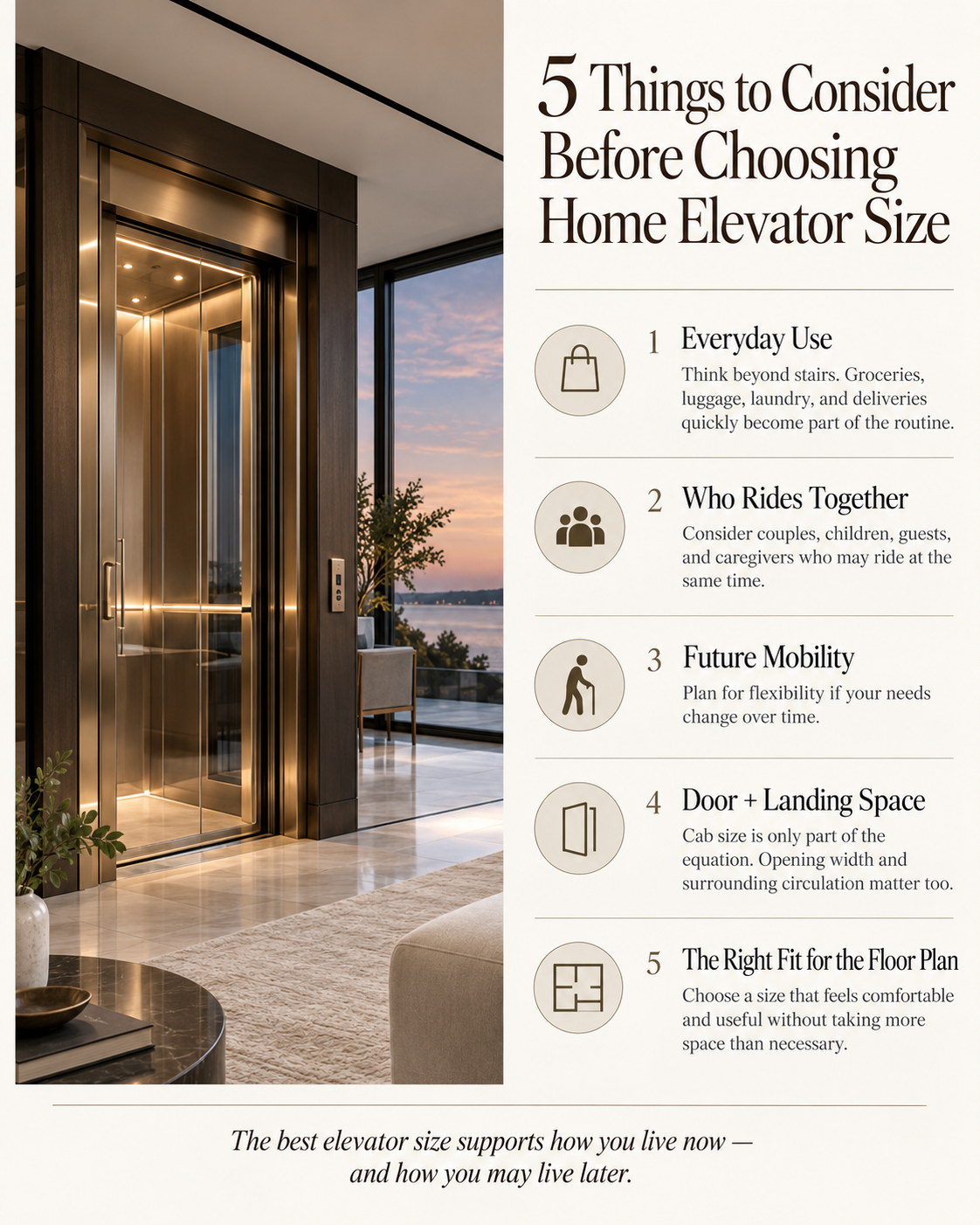
These small daily details matter more than they may seem during the early planning stages. A cab that technically meets the needs of the project can still feel too tight if it was selected without considering real-life use.
A little extra planning at the beginning can make the elevator significantly more comfortable and useful once the home is complete.
Consider More Than One Passenger
Many homeowners initially picture a residential elevator being used by one person at a time. In reality, couples, parents and children, grandparents and grandchildren, caregivers and guests often ride together.
That does not mean every home needs an oversized cab. It does mean the planning conversation should include how many people may reasonably use the elevator at once. The ability to comfortably ride with another person can make a meaningful difference in day-to-day convenience.
For homes designed for entertaining or frequent guests, this becomes even more important. A residential elevator should feel easy to use rather than like a space everyone has to carefully negotiate.
Think Ahead About Mobility
One of the strongest reasons homeowners add elevators is to make a home easier to live in over time. Even if no one currently uses a wheelchair, walker or other mobility device, future accessibility is worth considering during the sizing process.
Planning for additional maneuvering room can provide flexibility later without changing the way the elevator functions today. This is especially valuable for homeowners building a long-term or forever home and for families who want the house to remain comfortable through different stages of life.
Future-focused planning does not have to make a home feel clinical. When handled correctly, accessibility and good design work together quietly in the background.
Remember What Else Will Ride With You
Residential elevators quickly become useful for far more than people. Laundry baskets, suitcases, seasonal storage bins, cases of drinks, packages and groceries all move more easily between floors when an elevator is available.
Homeowners may also want the ability to move smaller pieces of furniture, baby equipment or household items without carrying them up a staircase. Thinking about these practical uses can help determine whether a slightly larger cab would add meaningful value.
The goal is not to design around every possible scenario. It is to avoid choosing dimensions that feel limiting once the elevator becomes part of everyday life.
Cab Size Is Only Part of the Equation
The interior cab dimensions matter, but so do the door configuration, opening width, landing space and overall layout. Two elevator cabs with similar interior measurements can feel very different depending on where the doors are positioned and how passengers enter and exit.
For example, the location of the elevator within the floor plan can affect how easily someone approaches the door with luggage or a mobility device. The relationship between the cab and surrounding hallways also influences how comfortable the entire experience feels.
That is why residential elevator planning works best when it is integrated with the home's layout rather than treated as an isolated specification.
Larger Is Not Automatically Better
It is easy to assume that more space is always preferable, but residential design is about balance. A larger elevator can require more floor area and may affect nearby rooms, closets, hallways or architectural features.
In some homes, a more compact elevator fits beautifully and serves the household perfectly. In others, giving the cab a little more room is worth the tradeoff. The right choice depends on the floor plan, the intended use and the homeowner's priorities.
Good planning means finding the size that feels generous enough to be useful without taking more space from the home than necessary.
Plan the Elevator With the Home, Not After It
The earlier elevator sizing is considered, the easier it becomes to make the entire design feel natural. Builders and architects can plan the hoistway, landings, surrounding rooms and circulation together instead of trying to fit the elevator into space that was designed for something else.
Early planning also gives homeowners more opportunity to think through how the elevator will connect different parts of the home. The result is usually a cleaner layout, better sightlines and a more comfortable experience on every floor.
This is especially important in custom homes, where small changes made early in the design process can have a major impact on how the finished home functions.
Choose for the Way You Want to Live
The best home elevator is not simply the one that fits the available opening. It is the one that fits the life happening around it.
Cab size, capacity, door configuration and landing space should all support the people using the elevator and the way the home is meant to function. When those decisions are made thoughtfully, the elevator becomes something more than a convenience. It becomes part of what makes the home easier to enjoy.
At Luxe Home Elevators, we help homeowners and building professionals think through those details early. The result is a residential elevator that feels appropriately sized, beautifully integrated and ready to serve the home for years to come.