
After the Storm: What to Check Before Using Your Home Elevator Again
After severe weather, most homeowners instinctively check the roof, windows, trees, power and any obvious water damage. A residential elevator may not be the first thing that comes to mind, particularly when the cab and doors appear completely normal. Storms, however, can affect much more than what you can see. Residential elevators rely on electrical systems, controls, door mechanisms, sensors and properly aligned components, all of which can be affected by flooding, lightning, power surges, wind-driven rain or structural damage.
That does not mean every thunderstorm requires a service call. It does mean that after a significant weather event, it is worth taking a few careful minutes to consider what the home experienced and check the areas around the elevator before returning it to normal use.
Start With What Happened to the Home
The first question is not simply whether the elevator turns on.
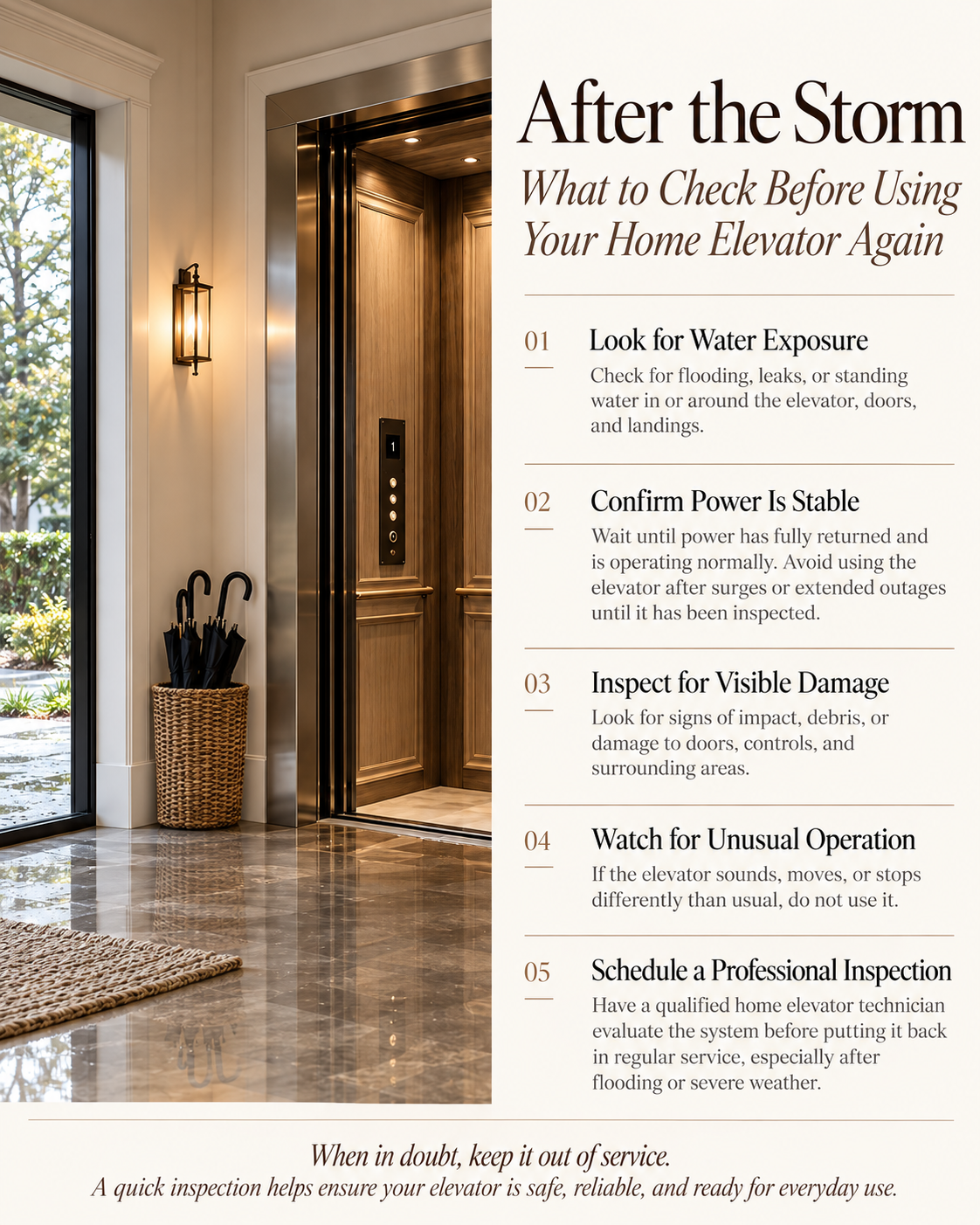
It is what the home itself just went through. A short power outage during a routine thunderstorm is very different from flash flooding, a nearby lightning strike, tornado damage or a hurricane that brought water into the house.
Think about whether the property experienced flooding, repeated power interruptions, electrical surges, structural movement, damaged windows or doors, roof leaks or debris impact. The more significant the event, the more cautious you should be before using the elevator again.
Check Carefully for Water Intrusion
Water is one of the clearest reasons to keep a residential elevator out of service until it can be evaluated. If floodwater, rainwater, a roof leak or another source of moisture reached the elevator shaft, pit, landing, equipment area or electrical components, do not assume the system is safe simply because the cab itself looks dry.
Look around every elevator landing for damp flooring, staining, swollen trim, water near the doors or signs that moisture has traveled through nearby walls or ceilings. If the lower level of the home flooded, that is especially important because elevator equipment can be affected below the visible cab level. When there is any reason to believe water reached the elevator system, the safest next step is professional inspection before operation.
Be Cautious After a Power Outage or Surge
Many severe storms bring outages, flickering power or repeated interruptions as utilities work to restore service. Even once the lights come back on, avoid immediately cycling the elevator through every floor simply to make sure it works.
First, confirm that the home’s electrical system appears stable. Flickering lights, tripped breakers, partial power or other irregularities can indicate that electrical service has not fully normalized. Lightning and power restoration can also expose equipment to electrical surges, so if the elevator powers back on but behaves differently than usual, stop using it and contact your elevator provider.
Look at the Doors and Landings
Take a few minutes to look at the elevator entrance on every floor. Doors should appear aligned and unobstructed, and the landing area should be dry, clear and free of debris or visible damage. Do not force a door that is sticking, rubbing, failing to close normally or sitting out of alignment.
If the home experienced major wind, impact or structural damage, the areas surrounding the elevator may have shifted even if the cab itself appears unaffected. A residential elevator works as part of the home around it, so damage to the surrounding structure can matter just as much as damage to the elevator equipment itself.
Pay Attention to Anything That Feels Different
Homeowners who use an elevator regularly tend to become familiar with how it normally sounds and moves, and that familiarity can be useful after a storm. If the elevator makes a new noise, hesitates, jerks, stops unevenly at a floor, has trouble with a door or displays an unfamiliar error, do not continue testing it.
Repeatedly running an elevator that is behaving differently will not tell you whether it is safe. It may simply create additional wear or worsen an existing problem. One unusual trip is enough reason to stop and have the system evaluated.
Consider Structural Damage Beyond the Elevator
Tornadoes, falling trees, high winds and flooding can affect a home in ways that are not always obvious at first glance. If the home sustained structural damage, the elevator should be included in the broader evaluation of the property rather than treated as a completely separate system.
Residential elevators depend on proper alignment, clearances, landings and surrounding construction. If the home has shifted or framing around the elevator has been affected, operation may also be affected. In those circumstances, waiting for professional clearance is far better than assuming the elevator was isolated from the rest of the damage.
When Should You Schedule an Inspection?
A professional inspection is especially important when there has been flooding or suspected water exposure near the elevator system, significant lightning activity, repeated outages or power surges, structural damage to the home, damage around elevator doors or landings, unusual sounds or movement, leveling issues, or an error that does not clear normally.
If none of those conditions are present and the storm caused only a brief outage, your elevator may return to normal operation without issue. When there is any doubt, however, keeping the system out of service until it can be checked is the safer choice.
Add the Elevator to Your Storm Checklist
Homeowners in areas prone to hurricanes, tornadoes, severe thunderstorms and flooding usually develop a routine for checking the home after bad weather. A residential elevator deserves a place on that list. A quick look at the landings, doors, surrounding areas and power conditions can help identify concerns before the elevator is used again, and knowing when to stop and call for service can protect both the equipment and the people who depend on it.
At Luxe Home Elevators, we believe homeowners should feel confident using their elevator every day. If severe weather has brought water, electrical problems or damage near your elevator system, having it professionally evaluated can provide clarity before returning it to service.