
The Model Home Effect: How a Home Elevator Can Help Buyers Understand the Upgrade
There are some upgrades buyers can understand immediately from a selections sheet.
Quartz countertops. Hardwood floors. An outdoor fireplace. A larger primary shower.
A home elevator can be different.
For a buyer who has never lived with one, "optional residential elevator" may sound like something they'll need decades from now—or simply another line item competing for their upgrade budget.
Then they walk into a model home that has one.
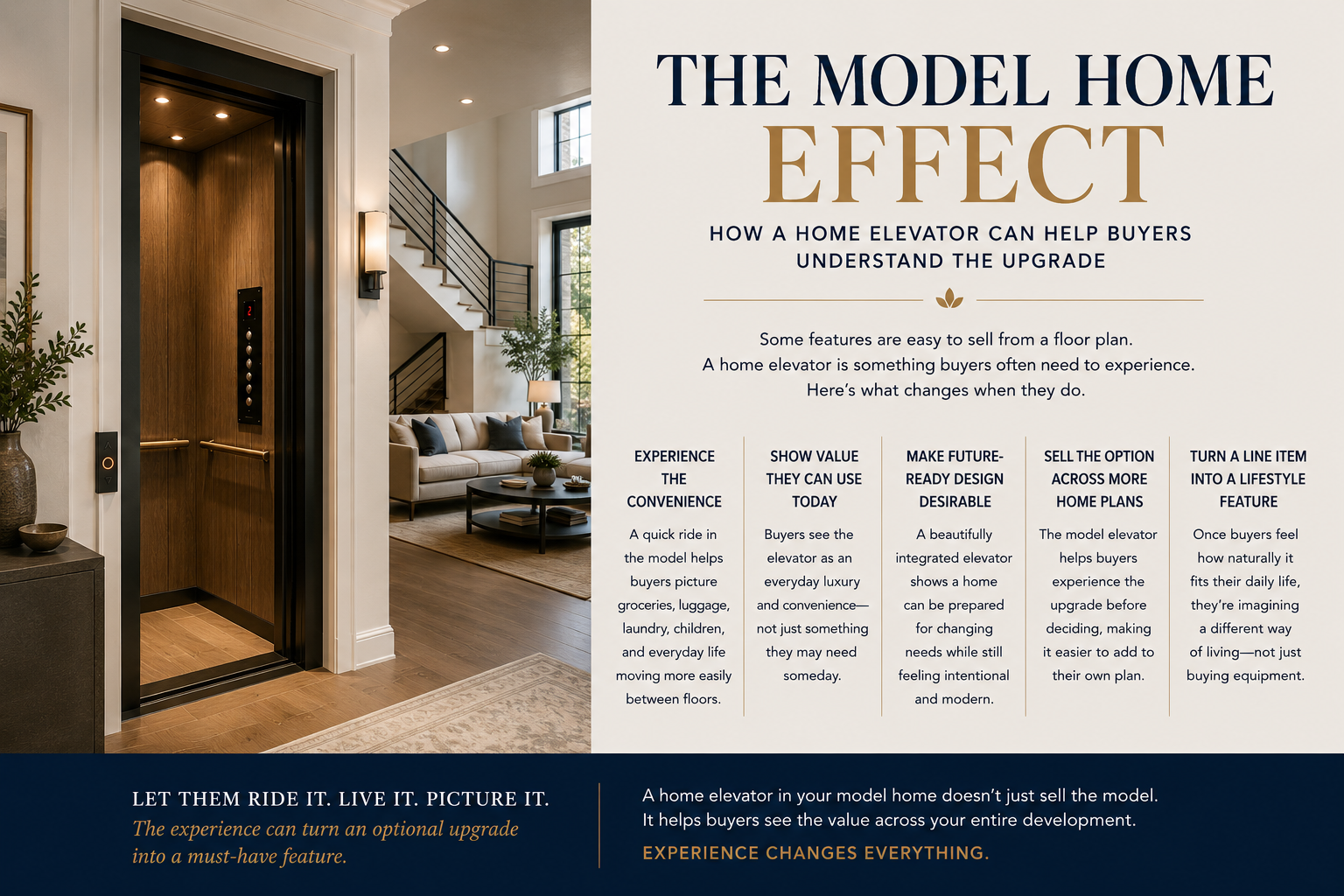
They ride upstairs. They picture bringing in groceries without carrying bags up two flights of stairs. They think about suitcases, laundry baskets, grandparents visiting, a sleeping toddler, or simply moving through a three-story home without always taking the stairs. For developers offering home elevators as an option—or considering making them available in more plans—a model home may be one of the most effective places to demonstrate their value.
Some Features Need to Be Experienced
Model homes exist for a reason.
Buyers can look at renderings and floor plans all day, but walking through a finished home gives them something a drawing can't: context. They understand how tall the ceilings feel. They notice the natural light. They experience the relationship between the kitchen and outdoor living space. They begin imagining their own furniture, routines, and family inside the home. A residential elevator benefits from that same experience. On paper, buyers may categorize it as an accessibility feature. In person, it quickly becomes a convenience feature, a luxury feature, a future-ready feature—and potentially one of the things they remember most about the house.
Let Buyers Discover the Everyday Uses
The strongest argument for a home elevator isn't necessarily what happens 20 years from now.
It's what happens Tuesday afternoon. Imagine a buyer touring a three-level model and realizing the elevator could carry luggage directly to the bedroom level. Or picturing holiday decorations going from storage to the main floor. Or seeing how much easier it would be to move laundry, groceries, bulky packages, and everyday household items between floors. Those aren't hypothetical future needs. They're ordinary life. When buyers physically experience the elevator inside a home, those uses become much easier to picture.
It Changes the Conversation Around Accessibility
There's another advantage to demonstrating an elevator in a model home: it can completely change the way buyers think about accessibility. Instead of introducing the elevator only when a buyer mentions aging parents, mobility concerns, or long-term accessibility, the model presents it as part of a beautiful modern home. That matters. A buyer in their 40s doesn't have to think, "Will I need an elevator someday?" They can think, "I'd use this constantly." At the same time, they know the home is better prepared if their needs—or the needs of someone they love—change later. That combination of immediate convenience and long-term flexibility can be incredibly compelling.
A Model Can Sell Elevators in Homes That Don't Have Them Yet
This may be the most interesting opportunity for developers. The elevator in your model isn't only selling the model. It's helping sell the option throughout the development. If multiple plans can accommodate an elevator, buyers have the opportunity to experience the feature before deciding whether to include it in their own home. That's dramatically different from asking someone to make an upgrade decision based on a floor-plan symbol, brochure photo, or verbal explanation. Once they've ridden in one, they understand what they're buying. Your sales team also has a natural way to start the conversation: "The elevator you used in the model can be incorporated into this plan as well." No hard sell required.
Make the Elevator Feel Like Part of the Architecture
There's an important distinction here. The model-home elevator shouldn't feel like equipment that was added to demonstrate an upgrade. It should feel like part of the house. The door style, flooring, cab finishes, lighting, hardware, and surrounding architecture can all reinforce the design language of the home. In a luxury development, that experience matters. Buyers aren't simply evaluating whether they want vertical transportation. They're evaluating whether the feature belongs in the kind of home they're buying. When the elevator is thoughtfully integrated into a beautifully designed model, the answer becomes much easier to see.
Give the Sales Team More Than a Spec Sheet
A model elevator also gives the sales team an opportunity to talk about the feature in a more meaningful way. Instead of rattling off technical specifications, they can help buyers connect it to their own lives. Have aging parents who visit frequently? Travel often and carry luggage upstairs? Planning for this to be a long-term home? Building three stories because you want the view from the top level? Have young children now but want a home that will continue working for your family as life changes? Those conversations aren't really about elevators. They're about the buyer. That's exactly where the conversation should be.
The Feature Buyers Didn't Know They Wanted
Some upgrades sell themselves in photographs. Others need to be experienced. For developers building larger, multi-level, luxury, or long-term homes, a residential elevator can fall squarely into that second category. Putting one in a model home gives buyers the chance to understand it before they're asked to assign a dollar value to it. They can ride it. Use it. Picture their lives around it. And a feature they may have skipped over on the options sheet can quickly become the upgrade they don't want to build their home without.