
How to Keep Kids Safe Around Your Home Elevator
A home elevator can make life easier for everyone in the family—including parents. From carrying laundry to moving groceries and strollers between floors, elevators quickly become part of everyday life.
Like any feature in the home, however, children should be taught how to use it safely.
The good news is that modern residential elevators include multiple built-in safety features designed to protect users of all ages. Pair those features with a few simple household rules, and your elevator can remain both safe and convenient for years to come.
Start With Basic Elevator Rules
Children are naturally curious. Buttons, doors, and moving equipment tend to attract attention.
That's why it's important to establish clear rules early.
Children should understand that:
The elevator is not a toy.
Doors should never be forced open.
Buttons should only be used when riding.
Younger children should ride with an adult.
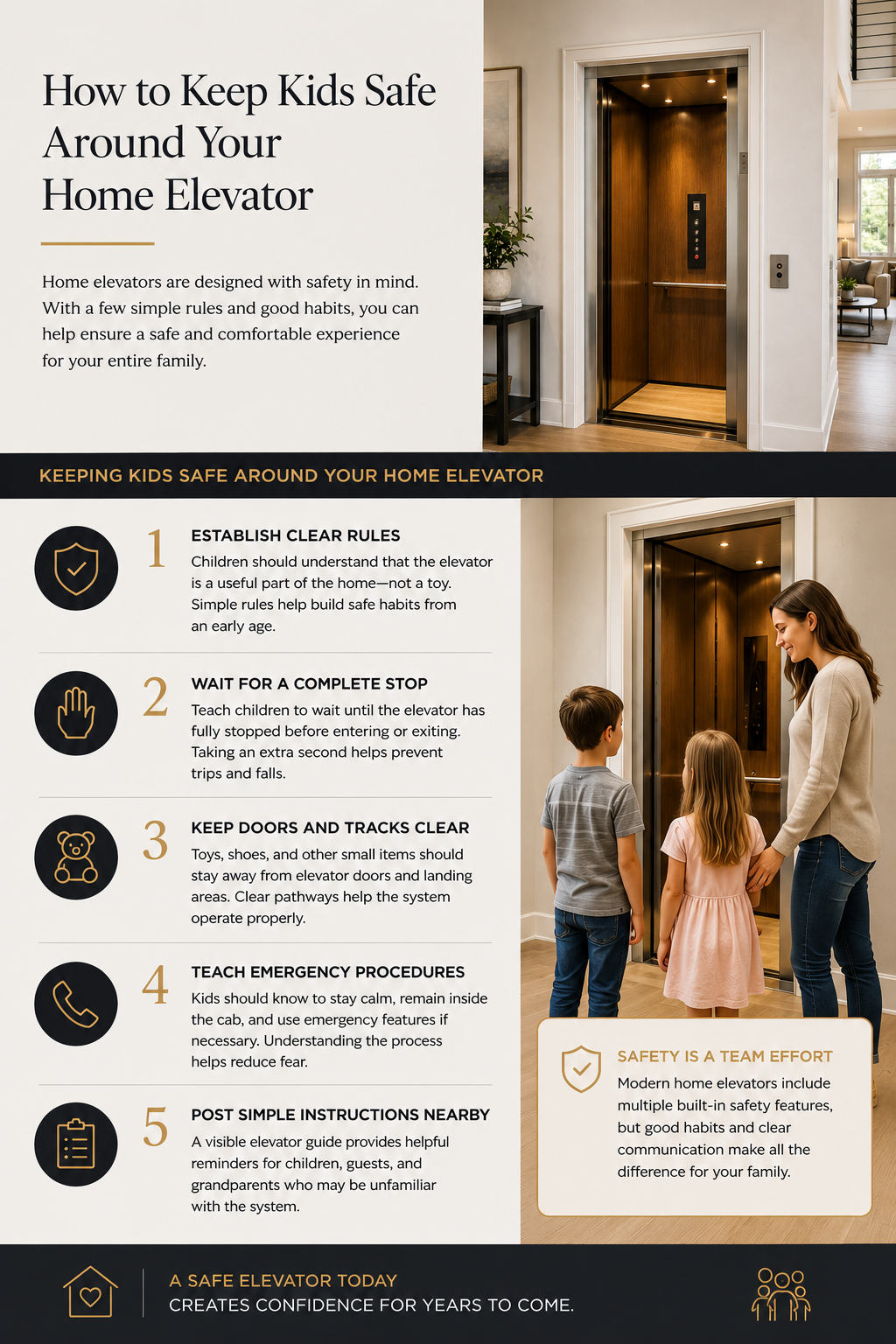
The goal isn't to create fear—it's to create familiarity and respect for how the system works.
Teach Kids to Wait for the Elevator to Stop Completely
One of the simplest safety habits is teaching children to wait until the elevator has come to a complete stop before entering or exiting.
Children should also learn to:
Watch their step when exiting
Avoid rushing through the doorway
Keep hands away from moving doors
These habits become second nature over time.
Keep Small Objects Away From Doors and Tracks
Kids love carrying toys, books, stuffed animals, and all sorts of treasures from floor to floor.
Encourage children to keep toys and objects clear of:
Elevator doors
Door tracks
Landing areas
Even small items can interfere with sensors or door operation.
A clutter-free landing area helps ensure smooth operation.
Make Sure Children Know What to Do in an Emergency
While elevator issues are uncommon, it's important that children know what to do if the elevator ever stops unexpectedly.
Teach them to:
Stay calm
Remain inside the elevator
Use the emergency phone or alarm button if needed
Wait for help rather than attempting to exit on their own
Knowing what to expect removes fear and encourages smart decision-making.
Keep an Elevator Guide Nearby
For families with younger children—or homes that frequently host grandchildren—it can be helpful to keep a simple elevator guide posted nearby.
A small framed card can include:
Basic operating instructions
Emergency contact information
Simple safety reminders
It also helps visiting children and guests feel more comfortable using the elevator.
Final Thought
Home elevators are designed with safety in mind, but good habits matter too.
By teaching children how the elevator works, setting clear expectations, and keeping safety top of mind, families can enjoy all the convenience of a home elevator with confidence.