
How Much Space Does a Home Elevator Really Need?
One of the first questions homeowners ask when considering a residential elevator is simple: Do I actually have room for one?
Many people assume elevators require large shafts or major structural changes. In reality, modern residential elevators can fit into surprisingly compact spaces when planned thoughtfully. Understanding the basic space requirements can help homeowners determine whether an elevator could work in their home.
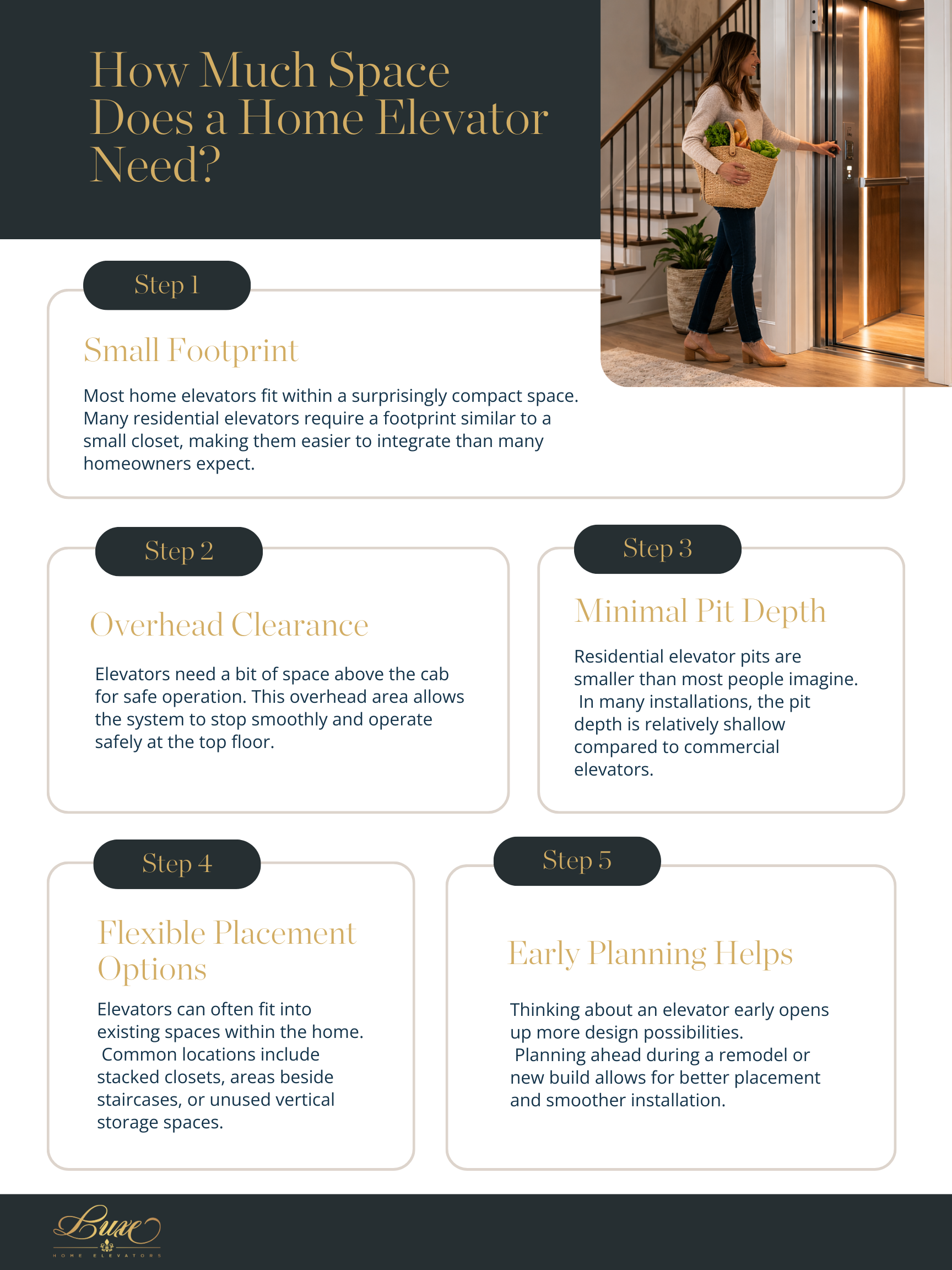
1. Most Residential Elevators Fit Within a Small Footprint
While exact dimensions vary by model, many home elevators require a footprint similar to a small closet.
Typical space considerations include:
A vertical shaft area
Landing access on each floor
Door clearance
Mechanical space depending on system type
In many homes, this space already exists within stacked closets, stair-adjacent areas, or unused corners.
2. Ceiling Height and Overhead Space Matter
Elevators require enough space above the cab for safe operation. This overhead clearance allows the elevator system to stop smoothly and safely at the top floor. During new construction or remodels, this space can usually be planned easily within the design.
3. The Elevator Pit Is Smaller Than Most People Expect
Some elevators require a shallow pit at the base of the shaft, but it is typically minimal compared to commercial systems. In many homes, the pit depth is only several inches. In remodel situations, installers can sometimes work with existing floor structures to accommodate the required depth.
4. Placement Options Are More Flexible Than You Might Think
Home elevators are often installed in places homeowners didn’t initially expect, such as:
Inside stacked closets
Adjacent to staircases
Near garage entry points
Within existing vertical storage spaces
A professional evaluation can often reveal possibilities that aren’t obvious at first glance.
5. Early Planning Creates the Most Options
When homeowners think about elevators early in a remodel or new build, placement becomes easier and more flexible.
Early planning allows designers and builders to:
Align the elevator between floors
Integrate doors naturally into hallways
Maintain smooth traffic flow through the home
The result is an elevator that feels like it was always meant to be there.
Final Thought
Many homeowners are surprised to learn how efficiently a residential elevator can fit into their home. With thoughtful planning and the right design approach, elevators can often be integrated into spaces that already exist. If you’re wondering whether your home has room for an elevator, a simple evaluation can often provide the answer.