
What Happens If a Home Elevator Gets Stuck? A Homeowner’s Guide to Staying Safe
There’s a common fear many homeowners have before installing a residential elevator:
“What if it gets stuck?”
The good news is that modern home elevators are designed with multiple built-in safety systems that make serious issues extremely rare. In most cases, a stopped elevator is simply responding exactly the way it was engineered to — safely and securely.
Still, knowing what to expect can help homeowners feel more confident and prepared. Whether your elevator temporarily loses power, pauses unexpectedly, or the doors won’t open right away, understanding the basics can make the situation far less stressful.
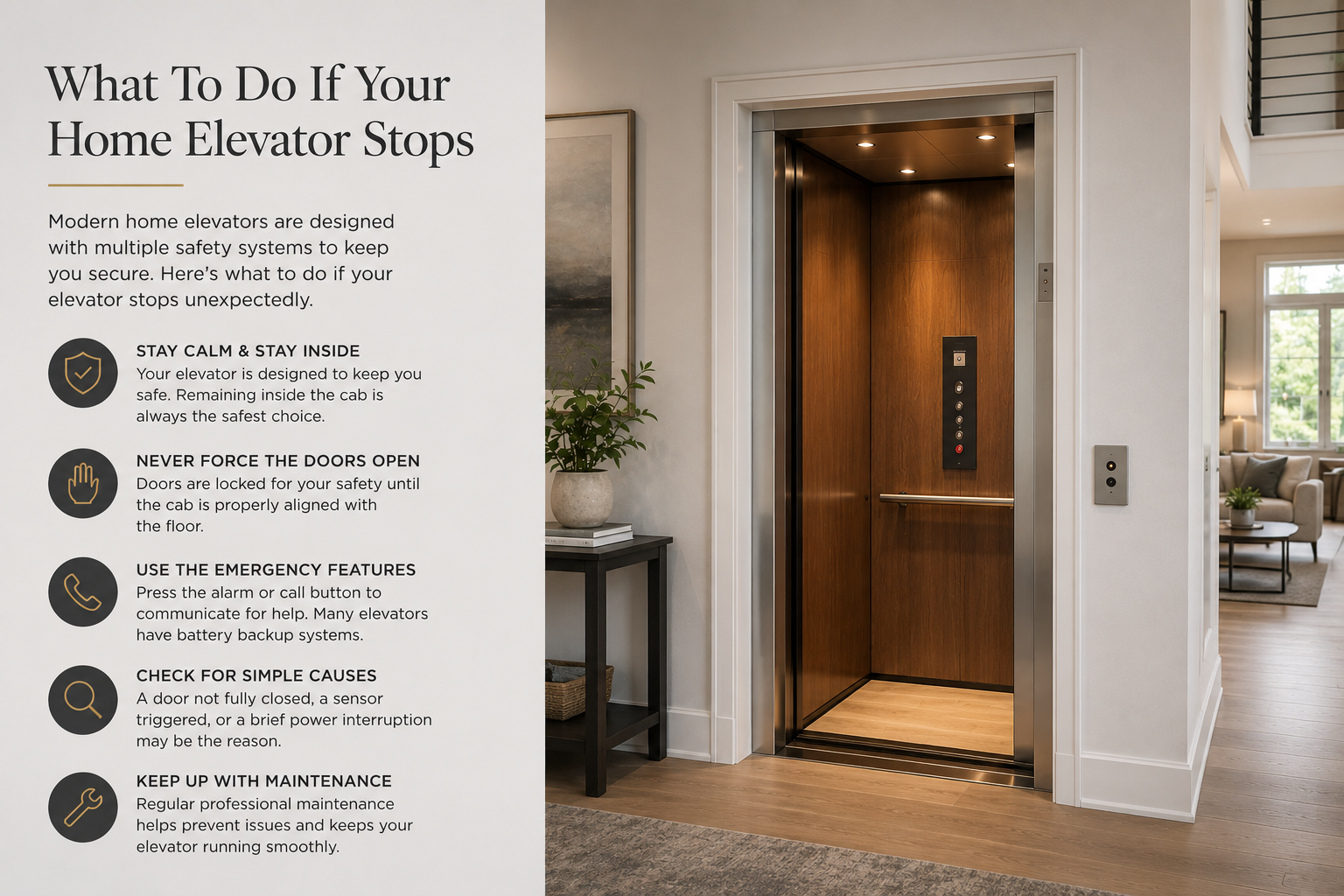
First Things First: Stay Calm
Modern residential elevators are not like old movie scenes where elevators suddenly drop or trap people in dangerous situations. Today’s systems are equipped with emergency brakes, backup safety features, communication systems, and battery-powered lowering technology designed specifically to protect passengers. If an elevator stops unexpectedly, the safest thing you can do is remain calm and avoid trying to force doors open or climb out yourself. In many cases, the elevator may simply need to reset or complete a safety check before operating normally again.
What Causes a Home Elevator to Stop?
There are several common reasons a residential elevator may temporarily stop between floors or refuse to move:
A power outage or electrical interruption
A door not fully latched
Weight limits being exceeded
A tripped safety sensor
Scheduled maintenance needs
An obstruction near the doors or gate
Most of these situations are minor and designed to trigger the elevator’s safety systems before a larger issue can occur.
What Should You Do If the Elevator Stops?
If you’re inside the elevator and it stops unexpectedly:
Stay inside the cab and avoid forcing doors open
Use the emergency phone or alarm button if equipped
Wait for the system’s automatic lowering feature to engage if power was lost
Contact your elevator service provider if the system does not resume operation
Many modern residential elevators automatically lower to the nearest floor during a power outage using battery backup systems.
What If the Doors Won’t Open?
Sometimes elevator doors may remain locked if the cab is not perfectly aligned with the floor. This is actually an important safety feature designed to prevent accidental openings between levels.
If the doors won’t open:
Do not pry or force them open
Check whether power has been interrupted
Wait a few moments to see if the system resets
Contact your elevator company for assistance if needed
Trying to manually force doors open can damage the locking system and create unnecessary repairs.
Preventative Maintenance Makes a Big Difference
The best way to avoid unexpected issues is routine maintenance. Regular inspections help identify worn components, sensor issues, or alignment adjustments before they become larger problems. Homeowners should schedule professional maintenance annually — or more often depending on usage. A properly maintained home elevator is incredibly reliable and designed for decades of safe operation.