
Home Elevator Safety: How to Protect Your Family and Guests
A home elevator should feel effortless — but it should also feel secure. Whether you use your elevator every day or only when guests visit, safety should always be part of the conversation.
Modern residential elevators are designed with built-in safeguards, but homeowners can take additional steps to ensure their elevator remains safe, reliable, and worry-free for everyone who uses it. Here’s what every homeowner should know.
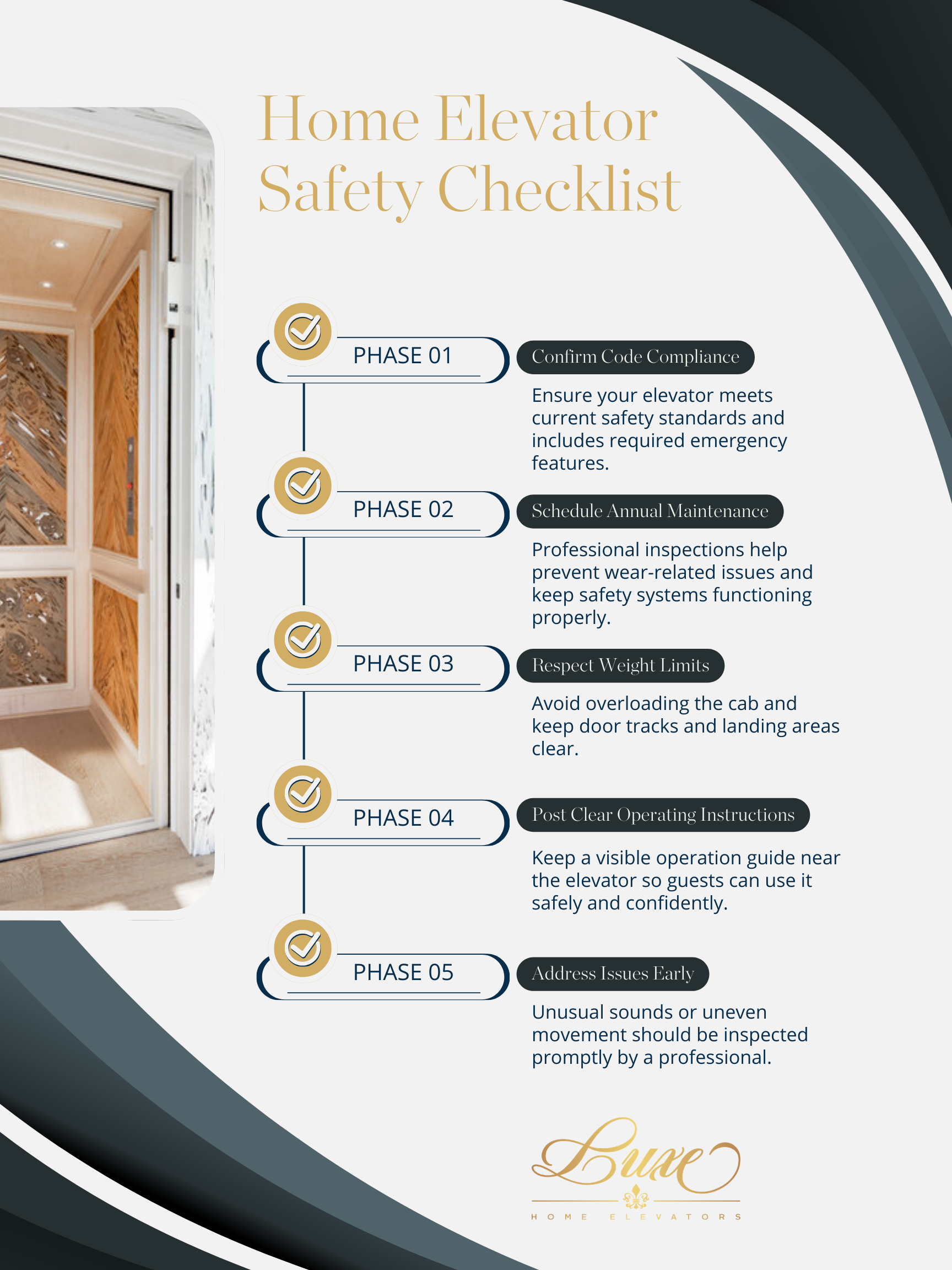
1. Make Sure Your Elevator Meets Current Safety Codes
All residential elevators should comply with current safety standards, including:
Door interlock systems
Proper door gap spacing
Emergency communication features
Safe stopping mechanisms
If your elevator was installed years ago, it may be worth reviewing whether it meets updated safety guidelines. A professionally installed and maintained elevator is the foundation of safety.
2. Schedule Regular Professional Maintenance
Routine service is one of the most important safety practices.
Regular maintenance helps:
Detect wear before it becomes a hazard
Ensure doors close and lock properly
Confirm emergency systems function correctly
Maintain smooth, reliable operation
Most homeowners benefit from an annual inspection by a certified technician.
3. Keep the Cab Clear and Balanced
While home elevators are durable, they are designed with specific weight limits.
To maintain safe operation:
Avoid exceeding the rated capacity
Keep items clear of door tracks
Ensure nothing blocks landing doors
Distribute weight evenly when transporting heavier items
Simple awareness prevents avoidable issues.
4. Guide Guests Clearly and Keep Instructions Visible
In homes with frequent visitors — or in short-term rental properties — guests may be unfamiliar with residential elevator controls. Even though modern systems are intuitive, clear guidance improves safety and confidence.
Helpful steps include:
Giving a quick explanation when guests arrive
Ensuring lighting near the elevator is bright and clear
Making sure buttons are clearly labeled
Encouraging children to ride with adults
Keep an Operation Guide Nearby
It’s also a good idea to keep a simple elevator operation guide in an obvious, easy-to-see location near the elevator.
This guide can include:
Basic operating instructions
Weight limits
Emergency communication instructions
A service contact number
A small framed instruction sheet or clearly displayed card provides reassurance and helps prevent misuse — especially for guests using the elevator for the first time. Clear instructions create confident users — and confident users operate elevators more safely.
5. Monitor Unusual Sounds or Movement
A safe elevator should operate smoothly and quietly.
If you notice:
Grinding or scraping noises
Jerky or uneven movement
Doors not closing completely
Delays between button press and movement
Schedule a service appointment promptly. Early attention prevents larger safety concerns.
Final Thought
Home elevator safety isn’t complicated — but it is intentional. With proper installation, routine maintenance, visible guidance for guests, and simple user awareness, your elevator can remain one of the safest and most reliable features in your home. Need a safety inspection or maintenance review? Luxe Home Elevators is here to help.